MEDICAL CLOUD IN GERMANY: REVOLUTIONIZING HEALTHCARE THROUGH DIGITAL INNOVATION

Germany stands at the forefront of healthcare digitalization in Europe, pioneering innovative approaches to medical cloud computing that balance technological advancement with stringent data protection requirements. As Europe’s largest healthcare market, Germany’s digital transformation initiatives are reshaping how medical data is managed, shared, and utilized across the continent.
THE GERMAN HEALTHCARE DIGITALIZATION LANDSCAPE

Germany’s healthcare system serves over 83 million citizens through a complex network of statutory and private insurance schemes. The country’s commitment to healthcare digitalization has accelerated dramatically in recent years, driven by the need to address demographic challenges, improve care quality, and enhance operational efficiency.
The German healthcare market represents approximately €390 billion annually, making it the largest in Europe and fourth globally. This massive market provides significant opportunities for cloud-based healthcare solutions, but also presents unique challenges related to data sovereignty, privacy protection, and regulatory compliance.
KEY DRIVERS OF DIGITAL TRANSFORMATION
The digitalization of German healthcare is driven by several critical factors:
1. Demographic Pressures: Germany faces one of the world’s most rapidly aging populations, with 23% of citizens over 65 years old
2. Healthcare Professional Shortages: Significant gaps in medical personnel require technological solutions to maintain care quality
3. Cost Containment: Rising healthcare costs necessitate efficiency improvements through digital solutions
4. Patient Expectations: Increasing demand for digital health services and telemedicine options
5. Regulatory Support: Government initiatives promoting digital health adoption and interoperability
Telematics Infrastructure (TI): The Backbone of German Digital Health
Germany’s Telematics Infrastructure (Telematikinfrastruktur – TI) represents one of the world’s most ambitious national healthcare digitalization projects. Managed by gematik, the national digital health agency, the TI creates a secure network connecting all healthcare providers across Germany.
CORE COMPONENTS OF THE TI
The TI infrastructure consists of three main layers:
1. CENTRALIZED INFRASTRUCTURE
· Secure network backbone connecting all healthcare providers
· Identity and authentication services ensuring secure access
· Central services for data exchange and communication
· Monitoring and security systems protecting the entire network
2. DECENTRALIZED INFRASTRUCTURE
· Local connectors at healthcare provider sites
· Practice management systems integration
· Medical devices and equipment connectivity
· Local security modules ensuring end-to-end protection
3. APPLICATION SERVICES
· Electronic Health Records (ePA) for comprehensive patient data management
· E-prescriptions (eRezept) for digital prescription processing
· Emergency data management for critical patient information
· Medication plans and interaction checking

The TI employs multiple security layers to protect sensitive medical data:
· Multi-factor authentication using electronic health professional cards (eHBA) and institutional cards (SMC-B)
· End-to-end encryption for all data transmissions
· Digital signatures ensuring data integrity and non-repudiation
· Audit logging for complete traceability of all access attempts
· Secure hardware modules at all connection points
NEW REGULATIONS: THE GAME-CHANGING C5 REQUIREMENTS
On July 1, 2024, Germany implemented groundbreaking new regulations under Section 393 of the Social Code (SGB V) that fundamentally changed how healthcare organizations can use cloud computing services. These regulations represent the most stringent cloud security requirements for healthcare globally.
C5 Certification Mandate

The new law requires all cloud service providers handling German healthcare data to obtain C5 (Cloud Computing Compliance Criteria Catalog) certification from the Federal Office for Information Security (BSI). This certification ensures:
· Comprehensive security controls across 17 domains including identity management, data protection, and incident response
· Continuous monitoring and regular security assessments
· German data sovereignty requirements with specific data localization mandates
· Enhanced transparency regarding data processing and security measures
IMPACT ON HEALTHCARE ORGANIZATIONS
The new regulations have significant implications for healthcare providers:
COMPLIANCE REQUIREMENTS FOR MEDICAL CLOUD AI IN GERMANY
· Mandatory C5 certification for all cloud service providers
· Data localization within EU/EEA with specific German requirements
· Enhanced risk assessments for cloud service adoption
· Detailed documentation of data processing activities
Implementation Challenges
· Limited provider options as certification requirements are stringent
· Increased costs due to compliance overhead
· Complex migration processes for existing cloud deployments
· Extended procurement timelines due to certification verification requirements
TECHNICAL DEEP DIVE: GERMAN HEALTHCARE CLOUD IMPLEMENTATION
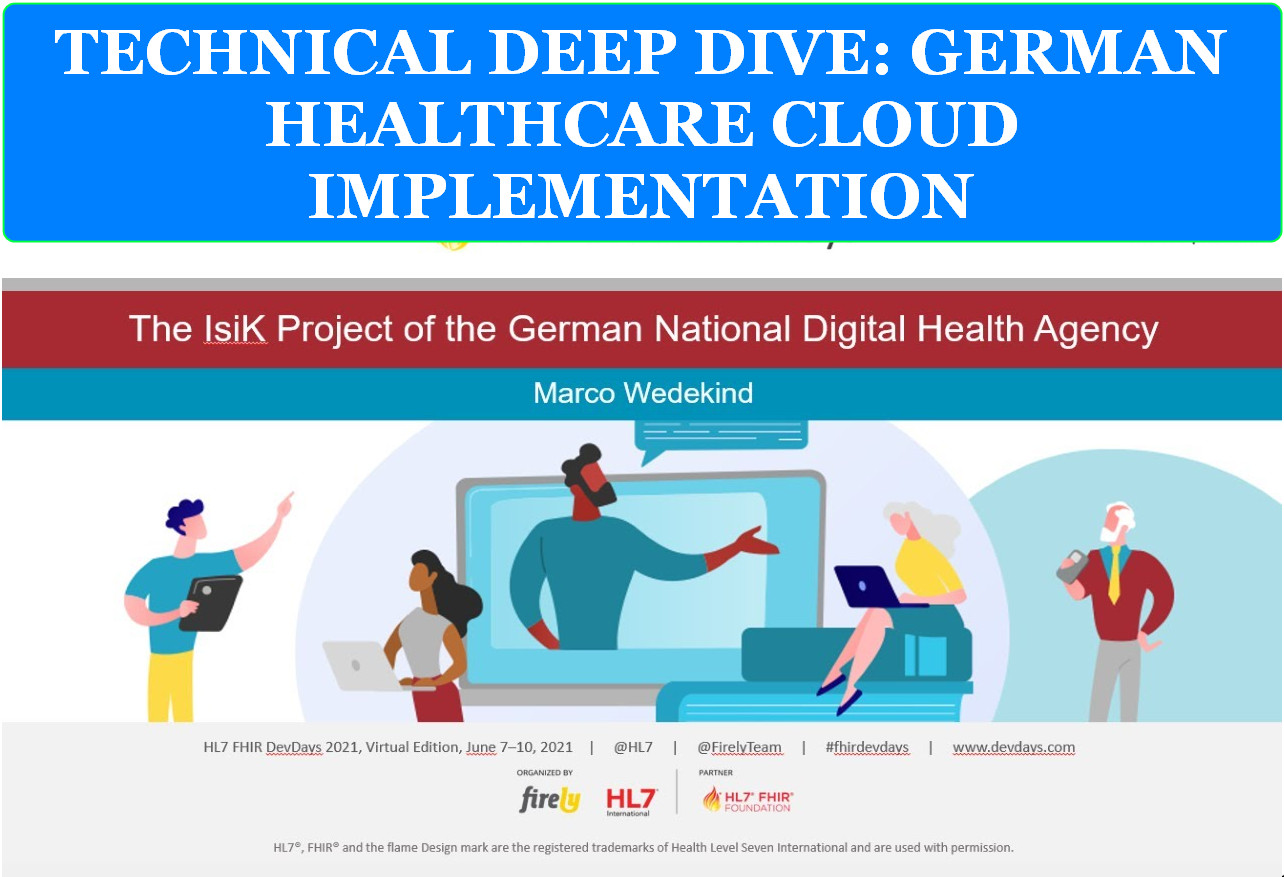
Marco Wedekind explains the ISiK project and digital health standards
LEADING GERMAN CLOUD PROVIDERS AND SOLUTIONS
STACKIT: THE SOVEREIGN CLOUD SOLUTION
STACKIT, operated by the Schwarz Group, has emerged as Germany’s leading sovereign cloud provider for healthcare. Key features include:
· 100% German ownership ensuring data sovereignty
· C5 certification meeting all regulatory requirements
· GDPR compliance by design and default
· Healthcare-specific services including secure data processing and analytics
· Hybrid cloud options supporting various deployment models
plusserver: Specialized Healthcare Cloud
plusserver offers comprehensive healthcare cloud solutions with:
· Dedicated healthcare infrastructure optimized for medical workloads
· Electronic Health Record (EHR) support with seamless integration capabilities
· Medical imaging solutions supporting DICOM standards
· Disaster recovery services ensuring business continuity
· 24/7 support with healthcare-specialized expertise
T-Systems: Enterprise Healthcare Solutions
T-Systems provides extensive healthcare digitalization services:
· TI connectivity services for telematics infrastructure integration
· Managed cloud services for complex healthcare environments
· Cybersecurity solutions protecting against healthcare-specific threats
· Digital workplace solutions supporting remote healthcare delivery
· IoT and edge computing for medical device connectivity
INTERNATIONAL CLOUD PROVIDERS IN GERMANY
AMAZON WEB SERVICES (AWS)
AWS has made significant investments in the German healthcare market:
COMPLIANCE AND CERTIFICATION
· C5 certification for specific services and regions
· GDPR compliance with extensive data protection controls
· ISO 27001 and other healthcare-relevant certifications
· BAA (Business Associate Agreement) equivalents for German healthcare
HEALTHCARE-SPECIFIC SERVICES
· AWS HealthLake for comprehensive health data management
· Amazon Comprehend Medical for natural language processing of medical texts
· AWS for Health specialized solutions and consulting services
· Life sciences solutions supporting pharmaceutical and medical device companies
CASE STUDY: FACHKLINIKUM MAINSCHLEIFE
AWS successfully supported the digital transformation of Fachklinikum Mainschleife, managing approximately 30 critical applications including EHRs and health information systems. The implementation achieved:
· Improved scalability to handle varying workloads
· Enhanced security meeting German healthcare standards
· Cost optimization through efficient resource utilization
· Disaster recovery capabilities ensuring business continuity
Real-world implementation of AWS in German healthcare settings
MICROSOFT AZURE
Microsoft has established a strong presence in German healthcare through:
SOVEREIGN CLOUD OFFERINGS
· Microsoft Cloud Deutschland with German data residency
· Azure Government services adapted for healthcare requirements
· Microsoft 365 with healthcare-specific compliance features
· Power Platform for healthcare application development
HEALTHCARE SOLUTIONS
· Microsoft Cloud for Healthcare integrated platform
· Teams for Healthcare secure communication and collaboration
· Azure Health Data Services for FHIR-based interoperability
· AI and analytics services for medical insights and research
GOOGLE CLOUD PLATFORM
Google’s approach to German healthcare includes:
SECURITY AND COMPLIANCE
· Google Cloud Germany with local data processing
· Healthcare API supporting German standards
· Chronicle Security for healthcare cybersecurity
· Vertex AI for healthcare machine learning applications
SPECIALIZED OFFERINGS
· Healthcare Interoperability supporting HL7 FHIR standards
· Medical imaging solutions with advanced AI capabilities
· Research and analytics platforms for clinical research
· Workspace for Healthcare collaboration tools
DATA PROTECTION AND GDPR COMPLIANCE

Germany’s approach to healthcare data protection goes beyond standard GDPR requirements, implementing additional safeguards specific to medical information.
ENHANCED PRIVACY REQUIREMENTS
DATA MINIMIZATION PRINCIPLES
· Purpose limitation ensuring data use only for specified medical purposes
· Storage limitation with defined retention periods for different data types
· Pseudonymization requirements for research and analytics applications
· Consent management with granular patient control options
TECHNICAL SAFEGUARDS
· Encryption standards using state-of-the-art cryptographic methods
· Access controls with role-based permissions and regular audits
· Data loss prevention systems monitoring all data movements
· Incident response procedures specifically designed for healthcare breaches
PATIENT RIGHTS AND CONTROL
German healthcare data protection emphasizes patient empowerment:
· Right to access comprehensive medical records through digital portals
· Right to portability enabling patients to transfer data between providers
· Right to rectification allowing patients to correct inaccurate information
· Right to erasure with appropriate medical and legal exceptions
· Granular consent options for different types of data processing
Educational Content: Understanding German Healthcare Market

Comprehensive overview of trends and market opportunities in German digital health
Digital Health Applications (DiGA)
Germany pioneered the world’s first national digital therapeutics reimbursement program through Digital Health Applications (Digitale Gesundheitsanwendungen – DiGA).
DiGA Framework
The DiGA program enables prescription and reimbursement of digital health applications:
APPROVAL PROCESS
· Fast-track pathway allowing conditional approval within three months
· Evidence requirements demonstrating positive care effects
· Interoperability standards ensuring integration with existing systems
· Security assessments validating data protection and cybersecurity measures
CATEGORIES OF APPROVED DIGA
· Mental health applications for depression, anxiety, and addiction treatment
· Chronic disease management for diabetes, hypertension, and heart disease
· Rehabilitation programs supporting recovery and therapy adherence
· Preventive care tools promoting healthy lifestyle behaviors
CLOUD INFRASTRUCTURE FOR DIGA
DiGA applications require robust cloud infrastructure supporting:
· Scalable architectures handling varying user loads
· Real-time data processing for monitoring and alerts
· Integration capabilities with EHR systems and telematics infrastructure
· Advanced analytics for outcome measurement and optimization
ARTIFICIAL INTELLIGENCE AND MACHINE LEARNING
German healthcare organizations are increasingly leveraging AI and ML capabilities through cloud platforms to enhance clinical decision-making and operational efficiency.
AI APPLICATIONS IN GERMAN HEALTHCARE
CLINICAL DECISION SUPPORT
· Diagnostic assistance using medical imaging analysis
· Treatment recommendations based on evidence-based guidelines
· Drug interaction checking and personalized medication management
· Risk prediction models for patient deterioration and complications
OPERATIONAL OPTIMIZATION
· Resource planning optimizing staff schedules and equipment utilization
· Supply chain management predicting inventory needs and reducing waste
· Financial analytics improving revenue cycle management and cost control
· Quality improvement identifying patterns and opportunities for enhancement
AI GOVERNANCE AND ETHICS
Germany has established comprehensive frameworks for AI governance in healthcare:
· Algorithm transparency requirements for clinical AI systems
· Bias detection and mitigation ensuring fair and equitable AI outcomes
· Human oversight maintaining physician control over AI-assisted decisions
· Continuous monitoring tracking AI performance and safety metrics
INDUSTRY INSIGHTS: DIGITAL HEALTHCARE OPPORTUNITIES
CHALLENGES AND BARRIERS
Despite significant progress, German healthcare cloud adoption faces several challenges:
TECHNICAL CHALLENGES
LEGACY SYSTEM INTEGRATION
· Outdated infrastructure in many healthcare facilities
· Interoperability gaps between different vendor systems
· Data migration complexity from legacy to cloud platforms
· Performance requirements for mission-critical medical applications
CONNECTIVITY ISSUES MEDICAL CLOUD IN GERMANY
· Rural broadband limitations affecting smaller healthcare providers
· Network reliability requirements for critical care applications
· Bandwidth constraints for large medical imaging files
· Latency sensitivity for real-time monitoring systems
ORGANIZATIONAL BARRIERS
CULTURAL RESISTANCE
· Physician skepticism regarding cloud-based solutions
· Staff training requirements for new digital tools and processes
· Workflow disruption during implementation phases
· Change management challenges in traditional healthcare organizations
FINANCIAL CONSTRAINTS
· High implementation costs for comprehensive cloud migrations
· Uncertain ROI timelines for complex healthcare transformations
· Budget limitations in public healthcare institutions
· Competing investment priorities for limited healthcare resources
REGULATORY COMPLEXITY
COMPLIANCE BURDEN
· Multiple regulatory frameworks requiring simultaneous compliance
· Frequent regulation changes necessitating ongoing adaptations
· Documentation requirements creating administrative overhead
· Audit and inspection processes consuming organizational resources
Future Outlook and Opportunities
The future of medical cloud computing in Germany looks promising, with several trends shaping the landscape:
EMERGING TECHNOLOGIES
EDGE COMPUTING INTEGRATION
· Hybrid cloud architectures combining local and cloud processing
· Real-time analytics at the point of care
· IoT device connectivity through edge gateways
· Reduced latency for critical medical applications
QUANTUM COMPUTING APPLICATIONS
· Drug discovery acceleration through quantum simulation
· Complex data analysis for genomics and personalized medicine
· Optimization problems in healthcare logistics and scheduling
· Cryptographic security protecting sensitive medical data
MARKET EXPANSION
TELEMEDICINE GROWTH
· Remote consultation platforms expanding access to specialist care
· Digital health monitoring enabling preventive care models
· Cross-border healthcare leveraging European health data spaces
· AI-powered diagnostics supporting rural and underserved areas
RESEARCH AND INNOVATION
· Clinical trial digitalization accelerating medical research
· Real-world evidence generation from routine clinical data
· Precision medicine initiatives using big data and AI
· Population health analytics informing public health policy
Keynote: Future of Digital Healthcare in Germany 
Prof. Dr. Edgar Franke discusses the future vision for German digital healthcare
INTERNATIONAL COLLABORATION AND STANDARDS
Germany plays a leading role in developing international healthcare cloud standards and fostering cross-border collaboration.
European Health Data Space (EHDS)
Germany is actively contributing to the EHDS initiative:
· Interoperability standards enabling seamless data exchange across EU member states
· Secondary use frameworks supporting research and innovation
· Cross-border care facilitating treatment across national boundaries
· Digital health certificates ensuring credential recognition
GLOBAL STANDARDS DEVELOPMENT
German organizations contribute to international healthcare cloud standards:
· HL7 FHIR development and implementation guidance
· DICOM standards for medical imaging interoperability
· ISO 27001 healthcare-specific security requirements
· IHE profiles for healthcare system integration
CONCLUSION
Germany’s approach to medical cloud computing represents a sophisticated balance between innovation and protection, setting global standards for healthcare digitalization. The country’s comprehensive regulatory framework, robust infrastructure investments, and commitment to data sovereignty create a unique environment that prioritizes patient privacy while enabling technological advancement.
The implementation of C5 certification requirements and the ongoing development of the Telematics Infrastructure demonstrate Germany’s commitment to creating the world’s most secure and interoperable healthcare cloud ecosystem. While challenges remain, including legacy system integration and organizational change management, the foundation for transformative healthcare digitalization is firmly established.
As Germany continues to refine its digital health strategy and expand cloud adoption, the country is positioned to become a global model for healthcare cloud implementation. The combination of strong regulatory oversight, significant market opportunities, and innovative technology solutions creates an environment where medical cloud computing can truly transform healthcare delivery while maintaining the highest standards of patient protection and data security.
The future of German healthcare lies in the successful integration of cloud technologies with traditional medical practice, creating a system that is more efficient, accessible, and personalized while remaining secure and patient-centered. This transformation will not only benefit German patients and providers but also contribute to the global advancement of digital health technologies and best practices.